Hans Uszkoreit (Cancelled)
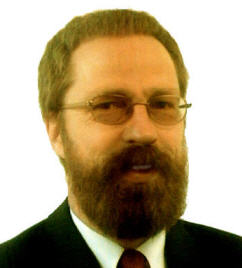
(courtesy of http://www.coli.uni-saarland.de/~hansu/)
Hans Uszkoreit is Professor and Chair of the Department of Computational Linguistics and Phonetics at Saarland University. At the same time he serves as Scientific Director at the German Research Center for Artificial Intelligence (DFKI) where he heads the DFKI Language Technology Lab. By cooptation he is also Professor of the Computer Science Department.
Prof. Hans Uszkoreit is one of the leading figures in natural language
processing, computational linguistics, and machine translation. He has
been leading many projects funded by European Union, and currently
coordinator of the European Network of Excellence META-NET.
Uszkoreit studied Linguistics and Computer Science at the Technische Universität of Berlin. He co-founded the Berlin city magazine Zitty, for which he worked as an part-time editor and writer. In 1977, he received a Fulbright Grant for continuing his studies at the University of Texas at Austin. During his time in Austin he also worked as a research associate in a large machine translation project at the Linguistics Research Center. In 1984 Uszkoreit received his Ph.D. in linguistics from the University of Texas. From 1982 until 1986, he worked as a computer scientist at the Artificial Intelligence Center of SRI International in Menlo Park, Ca. While working at SRI, he was also affiliated with the Center for the Study of Language and Information at Stanford University as a senior researcher and later as a project leader.
In 1986 he spent six months in Stuttgart on an IBM Research Fellowship at the Science Division of IBM Germany. In December 1986 he returned to Stuttgart to work for IBM Germany as a project leader in the project LILOG (Linguistic and Logical Methods for the Understanding of German Texts). At the same time he also taught at the University of Stuttgart.
In 1988 Uszkoreit was appointed to a newly created chair of Computational Linguistics at Saarland University and started the Department of Computational Linguistics and Phonetics. In 1989 he became the head of the newly founded Language Technology Lab at DFKI.
Uszkoreit is Principal Investigator of the Cluster of Excellence on Multimodal Computing and Interaction of the DFG (German Science Foundation).
He has been a co-founder and principal investigator of the Special Collaborative Research Division (SFB 378) "Resource-Adaptive Cognitive Processes" of the DFG (German Science Foundation). He is also co-founder and professor of the "European Postgraduate Program Language Technology and Cognitive Systems", a joint Ph.D. program with the University of Edinburgh. He has also been PI of two other Special Collaborative Research Divisions of the DFKI.
Uszkoreit is Coordinator of the European Network of Excellence META-NET, Permanent Member of the International Committee of Computational Linguistics (ICCL), Honorary Professor at Technische Universität Berlin, Coordinator of the International Erasmus Mundus Masters Program in Language and Communication Technologies, Member of the European Academy of Sciences, Past Member of the Board of the European Language Resources Association (ELRA), Past President of the European Association for Logic, Language and Information, Past Member of the Executive Board of the European Network of Language and Speech, and serves on several international editorial and advisory boards. He is a co-founder of XtraMind Technologies GmbH, Saarbruecken (now part of attensity inc.), acrolinx gmbh, Berlin and Yocoy Technologies GmbH, Berlin. From 2005-2011, he served as Chairman of the Board of Directors of the international initiative dropping knowledge.
His current research interests are computer models of natural language understanding and production, advanced applications of language and knowledge technologies such as semantic information systems, translingual technologies, cognitive foundations of language and knowledge, deep linguistic processing of natural language, syntax and semantics of natural language and the grammar of German.
Homepage: http://www.coli.uni-saarland.de/~hansu/
CV: http://www.coli.uni-saarland.de/~hansu/hucv_eng.pdf
Wikipedia: http://en.wikipedia.org/wiki/Hans_Uszkoreit
Frank van Eynde
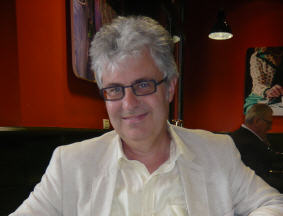
(courtesy of http://www.ccl.kuleuven.be/~frank/)
Frank Van Eynde is Professor at the Faculty of Arts and Chair of the Center
for Computational Linguistics at the University of Leuven (Belgium). He was
also a guest professor at the universities of Paris (1995) and Lille (2002-3).
Frank Van Eynde studied linguistics, literature and philosophy at the
universities of Leuven (Belgium), Muenster (Germany), Amsterdam (the Netherlands)
and Stanford (USA). He holds a BA in Language and Literature (Dutch & English),
a BA in Philosophy, an MA in Linguistics, a PhD in Arts & Philosophy and
topped it off with the Belgian equivalent of the German Habilitation.
He started his carreer at the Belgian Fund for Scientific Research (1980-1985),
had a post-doc stint at the University of Leuven (1985-1988), returned to the
Fund of Scientific Research (1988-2000), where he held a permanent position,
and switched back to the University of Leuven, where he was associate professor
from 2000 till 2003 and full professor since 2003.
His research is mainly in the fields of theoretical and computational
syntax and semantics. At the time of his PhD (1985) and his
post-doc years he focussed on the semantics of tense and aspect and on the
application of that research in machine translation. Later, at the time of
his Habilitation (1994) he shifted attention to syntax and the
syntax-semantics interface. Much of his work since then was done in the framework of
Head-driven Phrase Structure Grammar and led to numerous publications. The
HPSG bibliograpy lists 21 contributions, starting in 1994. Another more
recent interest is in the development and the exploitation of treebanks for
empirical research in syntax.
At the University of Leuven
Frank Van Eynde teaches both in the Linguistics program of the Faculty of Arts
and in the interdisciplinary Master of Artificial Intelligence program.
Within that program he coordinates the Language and Speech option.
He co-founded the Center for Computational Linguistics in 1991 and chaired it
from 1994 till 2000 and since 2004. At the Center he initiated and coordinated
many projects in machine translation, natural language processing and corpus
annotation, funded by various agencies, including the European Union.
At the moment, the Center is coordinator of the CLARIN-EU activities
in Flanders, the Dutch speaking part of Belgium.
At the Center for Computational Linguistics Frank Van Eynde hosted a long series
of sunmmer schools, conferences and workshops, including the 2nd European
Summer School in Language, Logic and Information (1990) and the 11th International
Conference on Head-driven Phrase Structure Grammar (2004).
The invited lecture focusses on the topic of agreement in clauses with a
predicative complement. It is part of a more comprehensive treatment of the syntax
and semantics of predicative complements that already led to contributions to
the proceedings of HPSG 2008 and HPSG 2009, as well as to the proceedings of
CLIN 2009 (Computational Linguistics in the Netherlands). A book length publication
is currently in the final stages of preparation. The lecture will present one section of
one chapter of the book.
Homepage: http://www.ccl.kuleuven.be/~frank
CV: http://www.ccl.kuleuven.be/~frank/CV.html
Mark Steedman
(courtesy of http://www.nasslli2012.com/courses/combinatory-categorial-grammar)
Mark Jerome Steedman is Professor of Cognitive Science in the School of Informatics at the University of Edinburgh, to which he moved in 1998 from the University of Pennsylvania, where he taught for many years as Professor in the Department of Computer and Information Science. He is a Fellow of the British Academy, the Royal Society of Edinburgh, and the American Association for Artificial Intelligence.
His research covers a range of problems in computational linguistics, artificial intelligence, computer science, and cognitive science, including syntax and semantics of natural language, and parsing and comprehension of natural language discourse by humans and by machine using Combinatory Categorial Grammar (CCG). Much of his current NLP research concerns wide-coverage parsing for robust semantic interpretation and natural language inference. Some of his research concerns the analysis of music by humans and machines.
Steedman graduated from the University of Sussex in 1968, with a B.Sc in Experimental Psychology, and from the University of Edinburgh in 1973, with a Ph.D. in Artificial Intelligence (Dissertation:The Formal Description of Musical Perception. Advisor: Prof. H.C. Longuet-Higgins FRS).
He has held posts as Lecturer in Psychology, University of Warwick (1977-83); Lecturer and Reader in Computational Linguistics, University of Edinburgh (1983-8); Associate and full Professor in Computer and Information Sciences, University of Pennsylvania (1988-98). He has held visiting positions at the University of Texas at Austin, the Max Planck Institute for Psycholinguistics, Nijmegen, and the University of Pennsylvania, Philadelphia.
Steedman currently holds the Chair of Cognitive Science in the School of Informatics at the University of Edinburgh (1998- ). He works in computational linguistics, artificial intelligence, and cognitive science, on Generation of Meaningful Intonation for Speech by Artificial Agents, Animated Conversation, The Communicative Use of Gesture, Tense and Aspect, and Combinatory Categorial Grammar (CCG). He is also interested in Computational Musical Analysis and Combinatory Logic.
Homepage: http://homepages.inf.ed.ac.uk/steedman/
CV: http://homepages.inf.ed.ac.uk/steedman/papers/cv/nsf10.pdf
Wikipedia: http://en.wikipedia.org/wiki/Mark_Steedman
Presentation Slides:  Presentation Slides (48p, 199KB)
Philip Hofmeister

(courtesy of http://crl.ucsd.edu/people/alumni.php)
Stanford University, Stanford, CA - Ph.D. in Linguistics (2002-2007)
Hampshire College, Amherst, MA - B.A. in Linguistics and Creative Writing (1998-2002)
Linguistic Society of America, Stanford University, Stanford, CA (2007 Summer)
North American Summer School in Logic and Information, University of Indiana,
Bloomington, IN (2004 Summer)
Linguistic Society of America, University of California - Santa Barbara, Santa Barbara, CA
(2001 Summer)
As of January 2012, he is Lecturer in the Department of Language and Linguistics at the University of Essex, UK.
His research is cross-disciplinary in nature, concerned broadly with what empirical evidence
from sentence processing can tell us about grammar and the cognitive processes that affect
comprehension throughout discourse. One line of research considers the relationship
between how a mental representation is formed and how it is retrieved from memory
subsequently, particularly within the domain of language comprehension. A second line of
research concerns the relationship between on-line processing difficulty and judgments of
acceptability and grammaticalization. Other research interests include referential form choice,
discourse planning and production, resumptive pronouns, and experimental syntax.
Homepage: http://privatewww.essex.ac.uk/~phofme/
CV: http://privatewww.essex.ac.uk/~phofme/cv2012.pdf
Abstracts:  View Abstract
Presentation Slides: Part1 (120p, 8.01MB) | Part2 (94p, 5.08MB) | Part3 (92p, 7.36MB)